
The Top Question about cars I am asked per month….????
- Rob Barrett
- Nov 14, 2025
- 4 min read
“If I was going to buy a car to fix-up and or restore, right now, what would I buy, if I wanted to ensure I make my money back in 5 years?”
So I’ll answer in detail, but to be CLEAR, the “ENSURE I MAKE my MONEY BACK” answer = ZERO CARS
But answering the question;
I’d buy a 1970–73 Datsun 240Z.
Decision One! Then I’d decide whether it lives as a clean, period-correct driver or a tasteful restomod / hot rod.

Why the 240Z hits the sweet spot
1. It matches the next wave of collectors, not the last
The collector market is in a generational transition: Gen X has overtaken Boomers in key metrics, and Millennials/Gen Z are rapidly shaping demand.
Younger buyers are moving away from old-school Boomer stuff (’50s land yachts, prewar, etc.) and toward Japanese, German, and “modern classic” performance.
Japanese vehicles are now a well-established segment and had explosive value growth in 2021–22; their own Hagerty “Japanese Vehicle Index” is stable to slightly up through 2024–25, not collapsing.
The 240Z specifically has outsized millennial interest: millennials were only ~18% of the market but generated about 26% of 240Z insurance quotes, meaning younger buyers are way excited about wanting this car.
That’s exactly what you want for a 5–10 year hold:a car that younger, rising-income buyers already love, not one that only 70-year-olds care about.
2. The car itself is perfect for both restoration and hot-rodding
Stock spec highlights (1970–73 240Z):
Inline-six, ~2.4L, ~150 hp (SAE gross), RWD, manual
Long hood, short deck, fastback profile, still looks modern
Lightweight, simple suspension, huge aftermarket support
Why it’s great to restore:
Iconic shape, instantly recognizable
Period-correct 240Zs are already worth noticeably more than 260Z/280Z siblings. They are the first gen and a GREAT size car.
Originality still matters: clean, stock-ish cars tend to keep or gain value, especially if rust is handled properly.
Why it’s great to hot-rod / restomod:
Tons of accepted paths:
built L-series,
turbo six,
V8 swaps, (this one is TRICKY and can kill the value so watch out here, realizing that this makes it a REALLY niche market that will want it. The people that love this idea will want it badly, but most won’t
or modern Nissan/EV drivetrains if you want to go full “future.”
Younger buyers like tasteful mods and drivable builds more than museum pieces; they want something they can actually have some fun with their friends on the weekends, in.
So you can go two ways:
Keep one relatively stock and clean = “collector-safe”
Or build a high-quality, well-documented restomod that will appeal to the same crowd that’s currently paying up for Singer/Restomod vibe.
3. Current and future value picture (2025–2035-ish)
Today:
Hagerty’s data shows 240Zs have gained significant appreciation over the last decade, and a good 240Z is worth roughly twice a similar 260Z, reflecting strong demand. (Hagerty)
In their market commentary, Japanese and modern classics are consistently cited as growth / resilience segments compared to some softening in traditional muscle and certain Boomermobiles. Look at the model A, pennies for a nice one.
Overall the market is fairly flat / correcting in 2024–25, not imploding, which is actually a nice entry point if you’re a buyer.
5–10 year outlook:
The big meta-trend: cars people lusted after in their teens peak in value when they hit 35–55. Right now that’s heavily 80s/90s, but ’70s J-cars like the 240Z are part of that sweet spot; they are the “origin story” for later icons.
Millennials and Gen X are only going deeper into JDM, analog sports cars, and “authentic” driver’s cars. The 240Z ticks all of that without being yet another Mustang/’Cuda competing in a crowded field.
Supply of solid 240Z shells is shrinking quickly (rust + old hacks), which helps support values for properly done cars.
No guarantees, obviously, but as a store of value with upside, a sorted 240Z looks a lot healthier than, say, a tri-five Chevy or a random chrome barge whose fanbase is aging out.
Quick compare: why not one of the usual suspects?
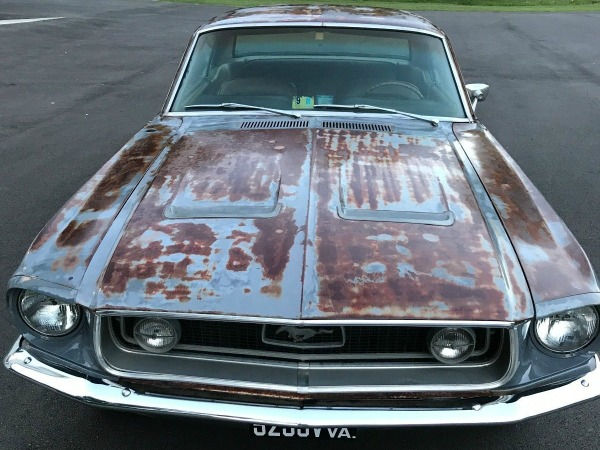
’60s American muscle: still loved, but a lot of the value is Boomer-driven. New buyers are more selective and seem less interested in some of the mid-tier nameplates.
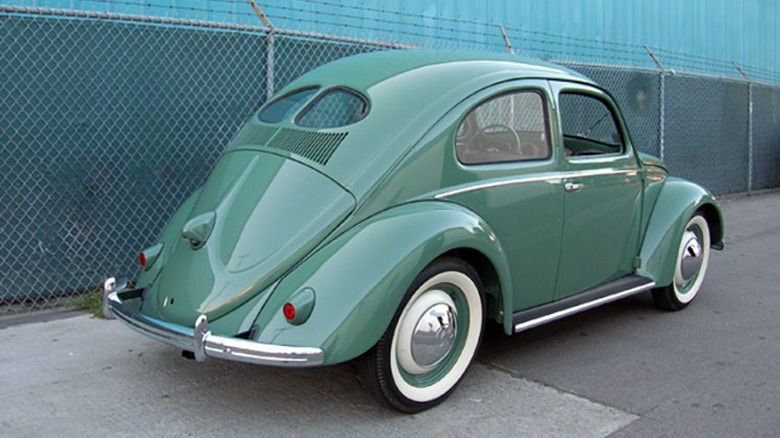
Tri-five Chevys, giant ’50s cruisers, prewar: younger generations have “few exceptions” of interest here; most models are struggling or flat.
Early trucks (C10, Broncos, Blazers): fantastic choices too, and I’d put a ’67–’72 C10 short bed as my runner-up, huge cross-generational appeal, big restomod culture, and still heavily featured in media and social.
But if I have to choose one car that sits right on the fault line between Boomer nostalgia and Gen-X/Millennial/JDM culture? The Z wins.
How I’d play it if I was looking to start today?
Buy the best body you can find.
Rust is the Z-killer; paying more up front for a clean shell is cheaper than metal work later.
Decide early: “collector resto” vs “hero restomod.”
Resto: keep factory colors, correct interior, period wheels, subtle upgrades (brakes, cooling, ignition).
Restomod: modern brakes, suspension, EFI or modern power, but with clean, timeless aesthetics (no Fast & Furious cosplay).
Document everything.
Build thread, photos, parts list, dyno sheet if applicable. The new generation lives online; provenance is content now.
Target “usable but special,” not trailer queen.
The 40–55 crowd in 2030 cares about whether they can drive the thing, not just polish it.
Hope this helps, Y’all…. And for more detailed info and us digging in on the real detail, please subscribe to our car club, which gets ya the newsletter. 99 CENTS a month! Thanks for the support
Comments