
The VW Bug Was Never Supposed To Be Cool. That’s Exactly Why It Became Legendary.
- Rob Barrett
- May 23
- 3 min read
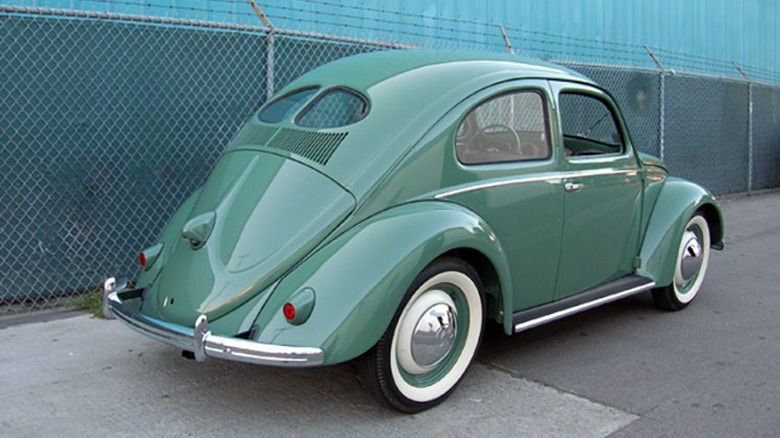
The Volkswagen Beetle has one of the strangest origin stories in automotive history because the car basically started life as transportation for ordinary people and somehow ended up becoming one of the biggest symbols of rebellion, hot rod culture, freedom, weirdness, and California creativity the world has ever seen.
That almost never happens.
Most cars either stay practical forever or become collectibles for rich people who wear loafers without socks and say things like “numbers matching” at dinner parties. The Bug did something else entirely. It escaped its original purpose.
The original Volkswagen concept came out of Germany in the 1930s. The idea was simple: build an affordable “people’s car.” That’s literally what Volkswagen means. A car regular families could own. Cheap to maintain. Easy to drive. Durable enough to survive terrible roads and terrible decisions.
Then World War II happened, which attached a very dark chapter to the car’s early history. A lot of people avoid talking about this because humans are weirdly uncomfortable holding two thoughts at the same time:
History can be ugly.
An object can evolve far beyond its origins.
After the war, the Beetle could have easily disappeared into history. Instead, something strange happened. The Allies saw value in the little car. Production resumed. Slowly, the Beetle spread across Europe and eventually into America.
And this is where the story becomes interesting.
Because Americans were obsessed with gigantic cars by the 1950s and 60s. Massive chrome barges with tailfins the size of aircraft carriers. Cars built like every family planned on towing a casino through Nevada. Then suddenly this tiny weird German bug-eyed machine arrives looking like it escaped from a cartoon.
And people loved it.
Partly because it was cheap.Partly because it was reliable.But mostly because it felt honest.
The Beetle didn’t pretend to be sophisticated. It didn’t care about status. It made strange noises. It smelled vaguely mechanical at all times. The heater worked whenever it felt emotionally prepared to participate. But the car had personality. Real personality.
Then California got involved.
And once California hot rod culture touches something, all bets are off.
People realized the Bug was incredibly light, rear-engine, air-cooled, and absurdly simple to work on. Suddenly young builders started lowering them, modifying them, swapping engines, cutting them apart, turning them into dune buggies, Baja cars, drag cars, surf cars, and complete rolling expressions of personality.
This is where companies like EMPI and later California-style VW builders entered the story. Southern California became ground zero for air-cooled culture because the weather was perfect, the beaches were nearby, and the state has always had a strange talent for turning ordinary transportation into identity.
And honestly, this is one of the most beautiful things humans do.
Give people something simple and affordable long enough, and eventually they start customizing it to reflect themselves.
That’s how hot rod culture was born in the first place.
The California Look Beetle became especially iconic. Clean paint. Lowered stance. Simple wheels. No clutter. No giant wings or nonsense. Just cool without trying too hard. Which ironically is the hardest thing in the world to achieve.
Then there was the opposite side of the culture:Baja Bugs.
People realized you could basically launch these things into the desert like mechanical cockroaches and they would somehow survive. Fiberglass fenders, lifted suspension, giant tires, roof lights, spare tires strapped everywhere like the owner was preparing for the apocalypse. Baja culture became its own religion.
And the funniest part of all this is that the Beetle succeeded because it was never intimidating.
Nobody sees a Bug and thinks:“Only wealthy elite collectors can enjoy this.”
The car invited participation.
Teenagers learned mechanics on Bugs.Artists drove Bugs.Hippies drove Bugs.Racers drove Bugs.Poor families drove Bugs.Weird uncles drove Bugs.People who couldn’t afford Porsches discovered the same rear-engine madness for a fraction of the money.
And somewhere in that process, the Beetle stopped being just a car.
It became proof that simplicity almost always outlives complexity.
Modern cars are objectively better in almost every measurable way. Faster. Safer. More efficient. More comfortable. But many of them feel emotionally dead. Giant iPads on wheels begging software updates for features that used to involve actual human interaction.
Meanwhile, an old Bug still makes people smile.
Not because it’s perfect.Because it feels alive.
That’s the secret most industries forgot.
Humans connect emotionally to imperfect things that have character.
And maybe that’s why the VW Bug survived generations, trends, regulations, and changing cultures while thousands of “superior” cars disappeared forever.
It was simple.Honest.Repairable.Funny looking.A little ridiculous.
In other words, very human.
Subscribe to our Car Club for even deeper dives into Cars like this!

Comments